Newer Graphics Cards Worth Considering: RTX 5080, RTX 5090, RX 9060 XT and Arc B580
Where the RTX 5080, RTX 5090, Radeon RX 9060 XT 16GB and Intel Arc B580 fit, who each card is for, and what to check before you buy one.
Where the RTX 5080, RTX 5090, Radeon RX 9060 XT 16GB and Intel Arc B580 fit, who each card is for, and what to check before you buy one.
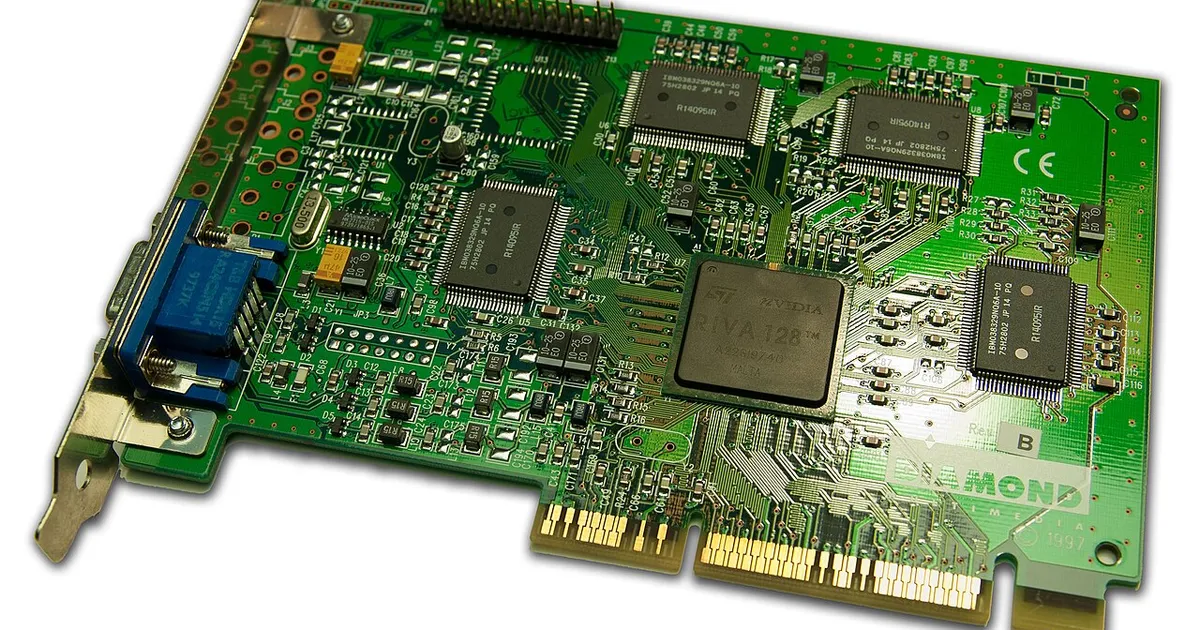
Photo by Timothy Borkowski / Wikimedia Commons / CC BY-SA 3.0
Affiliate links.As an Amazon Associate I earn from qualifying purchases. Links below go to Amazon; prices and availability change, so check Amazon for current pricing.Affiliate disclosure
The current graphics card generation stretches from budget 1080p cards to flagships that cost more than an entire mid-range PC. This guide covers four cards at very different points in that range and explains who each one actually makes sense for. It is a buying guide, not a hands-on review: it describes each card’s position and published memory configuration. Check current benchmarks and prices before you buy.
NVIDIA GeForce RTX 5090: only if you need the ceiling
The NVIDIA GeForce RTX 5090 is NVIDIA’s flagship, with 32GB of GDDR7 memory. It is built for 4K at very high refresh rates, heavy path tracing, and people who also use the GPU for AI or 3D work, where that memory matters.
Before you buy one, check three things:
- Power supply: it draws a lot of power through the 12V-2x6 connector. Use a quality ATX 3.x unit with a native cable rather than an adapter.
- Case clearance: most partner models are very long and thick. Measure your case.
- Your monitor: at 1440p, much of the card’s advantage is wasted, and the CPU often becomes the limit.
NVIDIA GeForce RTX 5080: high-end 4K without the flagship premium
The NVIDIA GeForce RTX 5080 has 16GB of GDDR7 and targets 4K and high-refresh 1440p. With DLSS 4 upscaling and frame generation, it handles demanding games at 4K for most players. For a gaming-only PC, it is a far more sensible high-end pick than the 5090.
AMD Radeon RX 9060 XT 16GB: the mid-range card to shortlist
The AMD Radeon RX 9060 XT 16GB is sold in 8GB and 16GB versions, and the difference matters. Newer games increasingly use more than 8GB of VRAM at high texture settings, so buy the 16GB model if you plan to keep the card for several years. It is aimed at 1080p and 1440p and supports AMD’s FSR 4 upscaling.
Intel Arc B580: a budget option with 12GB
The Intel Arc B580 gives budget builders 12GB of VRAM at the entry level. Two caveats apply:
- Turn on Resizable BAR in your motherboard BIOS. Arc cards lose significant performance without it.
- Pair it with a reasonably modern CPU. Arc’s driver overhead can hold it back on older processors.
How to choose
| If you… | Look at |
|---|---|
| Play at 4K and want the most headroom | RTX 5080 (or the 5090 if you also do AI or 3D work) |
| Play at 1440p on a mid-range budget | RX 9060 XT 16GB |
| Are building a budget 1080p PC | Arc B580 |
Whichever card you choose, skip the 8GB version of a card when a 16GB version costs only slightly more. Check your power supply’s wattage and connectors before you order.
Bottom line
Match the card to your monitor’s resolution and refresh rate, not to the biggest number on the shelf. Most gamers get better value from a well-matched mid-range card and a good monitor than from a flagship paired with a 1080p screen.
Our picks: Graphics cards
Shop on Amazon
Affiliate links.As an Amazon Associate I earn from qualifying purchases. Links below go to Amazon; prices and availability change, so check Amazon for current pricing.Affiliate disclosure
NVIDIA GeForce RTX 5070 Ti
16GB card that handles high-refresh 1440p and entry 4K.
Check price on AmazonNVIDIA GeForce RTX 5060 Ti 16GB
Budget-friendly 1080p/1440p pick; get the 16GB version.
Check price on Amazon
Illustrative photos: Photo by Timothy Borkowski / Wikimedia Commons / CC BY-SA 3.0; Photo by Advanced Micro Devices, Inc. (AMD) / Wikimedia Commons / Attribution