How to Read a PC Hardware Review Without Getting Fooled by Marketing Numbers
A guide to separating meaningful benchmark data from marketing spin when reading GPU, CPU, and component reviews.
Main page for gaming pcs: Gaming PCs →
A guide to separating meaningful benchmark data from marketing spin when reading GPU, CPU, and component reviews.
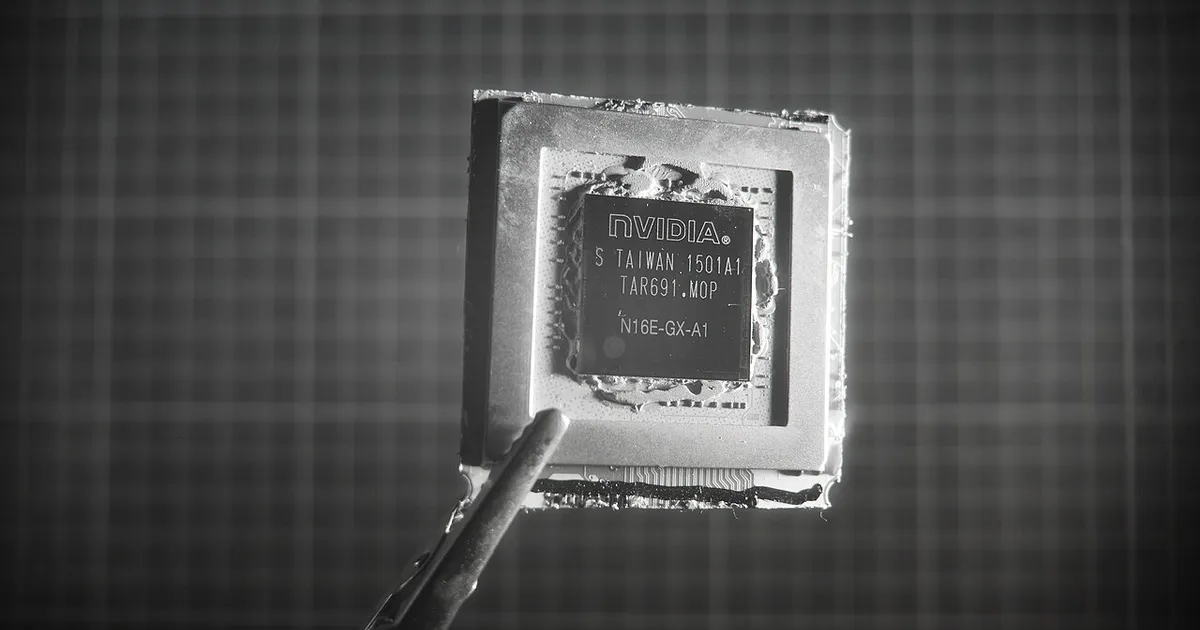
Photo by FritzchensFritz / Wikimedia Commons / CC0
Hardware reviews are supposed to help you decide whether a graphics card, CPU, or cooler is worth your money. Too often they do the opposite — burying a handful of useful numbers under slide-deck language lifted straight from a press kit. Knowing how to separate an actual test from a repackaged marketing brief is the single most useful skill you can bring to reading component reviews.
Look for the Testbed, Not Just the Results
A number on its own tells you almost nothing. “42% faster” is meaningless without knowing 42% faster than what, tested on what system, at what settings. A review worth trusting will disclose its test rig: CPU, RAM speed and timings, motherboard, storage, driver or BIOS version, and ambient temperature if thermals are being discussed. If a review only shows a bar chart with no methodology section anywhere on the page, treat every number in it as unverified. Component performance is sensitive to the rest of the system, and a reviewer who doesn’t tell you what they tested on either doesn’t know why it matters or doesn’t want you checking their work.
Averages Hide the Story — Ask About Consistency
A single average frame rate or benchmark score can mask wildly inconsistent performance underneath it. Good hardware coverage reports variance: minimum/low percentile frame rates alongside averages, frame-time graphs rather than just a headline number, or repeated test runs rather than a single pass. A part that averages well but stutters constantly will feel worse to use than the spec sheet suggests, and only a review that shows the distribution — not just the mean — will catch that.
Watch for Vague Superlatives
Phrases like “blazing fast,” “next-level performance,” or “a game changer” are marketing copy, not analysis, whether they come from a press release or a reviewer who copied the tone. None of these phrases are falsifiable — you can’t check whether something is a “game changer.” Contrast that with testable claims: “loads this benchmark scene 3 seconds faster than the previous generation at the same settings,” or “draws 15 watts less at idle, measured at the wall.” Testable claims can be verified by someone else re-running the test. Vague enthusiasm can’t be verified by anyone, which is exactly why weak reviews lean on it.
Check Whether Thermals and Power Were Actually Measured
Performance without context on heat and power draw is an incomplete picture, especially for components that throttle under sustained load. A short benchmark run can make a part look great while hiding thermal throttling that only shows up after ten or twenty minutes of continuous use. Reviews worth your time mention sustained-load testing, not just a quick synthetic pass, and report actual temperatures or power draw rather than describing a cooler as merely “efficient.”
How GamingScrims Will Approach Hardware Reviews
When our hardware review process launches, it will follow the same standard we’re asking you to hold other reviews to: a disclosed test system, methodology explained before the results, and no compensation from manufacturers in exchange for coverage or ranking, consistent with our editorial policy. We won’t publish a review that leans on a single benchmark run or a spec sheet dressed up as hands-on testing, and where we haven’t verified something ourselves, we’ll say so rather than guess.
A Quick Checklist Before You Trust a Hardware Review
- Is the test system fully disclosed, not just the result?
- Does the review show variance or consistency, not only an average?
- Are claims specific and testable, or just enthusiastic adjectives?
- Is thermal and power behavior addressed under sustained load?
- Is it clear whether the unit was purchased independently or provided by the manufacturer?
None of this requires technical expertise to check — it just requires reading past the headline number to see whether there’s a real test underneath it.
Our picks: Graphics cards & Processors
Shop on Amazon
Affiliate links.As an Amazon Associate I earn from qualifying purchases. Links below go to Amazon; prices and availability change, so check Amazon for current pricing.Affiliate disclosure
NVIDIA GeForce RTX 5070 Ti
16GB card that handles high-refresh 1440p and entry 4K.
Check price on Amazon
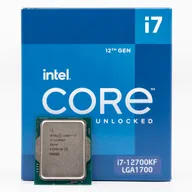
Illustrative photos: Photo by Timothy Borkowski / Wikimedia Commons / CC BY-SA 3.0; Photo by Myself User:ZyMOS / Wikimedia Commons / CC BY-SA 4.0; Photo by Advanced Micro Devices, Inc. (AMD) / Wikimedia Commons / Attribution; Photo by Jacek Halicki / Wikimedia Commons / CC BY-SA 4.0; Photo by Ondřej Martin Mach / Wikimedia Commons / CC BY-SA 3.0