IPS vs VA vs TN Panels: Choosing the Right Monitor Panel Type
A comparison of IPS, VA, and TN gaming monitor panel technologies, covering color, contrast, viewing angles, and response time trade-offs.
A comparison of IPS, VA, and TN gaming monitor panel technologies, covering color, contrast, viewing angles, and response time trade-offs.

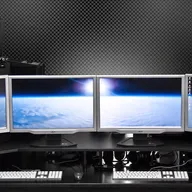
Photo by Lennybird / Wikimedia Commons / CC BY-SA 3.0
Before you even get to refresh rate and resolution, a gaming monitor’s panel technology sets the baseline for how it looks and feels. IPS, VA, and TN panels each make a different set of trade-offs, and understanding those trade-offs helps you pick the type that matches what you actually value.
TN: Fast and Affordable, But Limited
Twisted Nematic (TN) panels are the oldest and generally most affordable of the three. Their main strength is fast pixel response, historically making them a popular choice for competitive gaming where minimizing motion blur was the top priority.
The trade-offs are noticeable: TN panels typically have the weakest color accuracy and contrast of the three technologies, and their viewing angles are narrow — colors and contrast shift noticeably when viewed from the side or top. If you sit dead-center and care primarily about raw speed on a budget, TN remains a viable option, but the gap in image quality compared to modern IPS panels has made TN a less common choice than it used to be.
IPS: Best All-Around Color and Viewing Angles
In-Plane Switching (IPS) panels are known for accurate, vibrant color reproduction and wide viewing angles, meaning the image looks consistent whether you’re dead-center or off to the side. This makes IPS a strong choice if you care about visual quality for single-player games, content creation, or general use alongside gaming.
Modern IPS panels have also closed much of the response time gap with TN, with fast IPS options now common in gaming monitor lineups. The main historical weakness of IPS is contrast — blacks can look slightly grayish compared to VA panels — and some IPS panels are prone to a glow effect in dark scenes, especially visible in dark rooms. Check for panels specifically marketed as addressing this if deep blacks in dark content matter to you.
VA: Deep Contrast, Slower Motion
Vertical Alignment (VA) panels sit in between, known for the best native contrast ratio of the three — blacks look genuinely dark rather than gray, which makes VA appealing for atmospheric, dark-scene-heavy games and movies. Color reproduction on modern VA panels is generally good, often close to IPS.
The trade-off is response time and a phenomenon called “black smearing,” where dark, fast-moving objects can leave a trailing smear against other dark backgrounds. This has improved significantly in recent VA panels but is still generally a weaker point compared to fast IPS or TN options, so it’s worth checking recent user feedback on smearing for any specific VA panel you’re considering.
Matching Panel Type to Your Priorities
- Competitive/fast-paced gaming, budget-conscious: TN still works, though a fast IPS panel is often a better modern choice if pricing is close.
- Mixed gaming and general use, color accuracy matters: IPS is the safest all-around choice.
- Dark, atmospheric games and movies, contrast matters most: VA offers the deepest blacks, with the caveat of checking smearing performance.
Beyond the Three: A Quick Note on OLED
OLED panels, covered in more depth elsewhere on this site, offer near-instant response times and per-pixel contrast that outperforms all three panel types above, at a higher price point and with different long-term care considerations like burn-in risk. If budget allows, OLED is increasingly the benchmark the other three are compared against — but for most buyers, IPS, VA, and TN remain the practical, widely available options.
The Bottom Line
There’s no universally “best” panel type — only the best fit for how you use your monitor. Think honestly about whether you prioritize motion clarity, color accuracy, or contrast, and let that guide your choice rather than chasing whichever panel type currently gets the most buzz.
Our picks: Gaming monitors
Shop on Amazon
Affiliate links.As an Amazon Associate I earn from qualifying purchases. Links below go to Amazon; prices and availability change, so check Amazon for current pricing.Affiliate disclosure
ASUS TUF Gaming VG27AQ
Popular 1440p high-refresh monitor that rarely disappoints.
Check price on Amazon


Illustrative photos: Photo by Lennybird / Wikimedia Commons / CC BY-SA 3.0; Photo by PantheraLeo1359531 / Wikimedia Commons / CC BY 4.0; Photo by Terabass / Wikimedia Commons / CC BY-SA 3.0