Inside Tactical Shooter Esports: How Counter-Strike 2 and Valorant Competitions Work
Counter-Strike 2 and Valorant anchor two of the biggest tactical shooter esports scenes in the world. Here is how their competitive formats, economies, and tournament structures generally work.
Counter-Strike 2 and Valorant anchor two of the biggest tactical shooter esports scenes in the world. Here is how their competitive formats, economies, and tournament structures generally work.
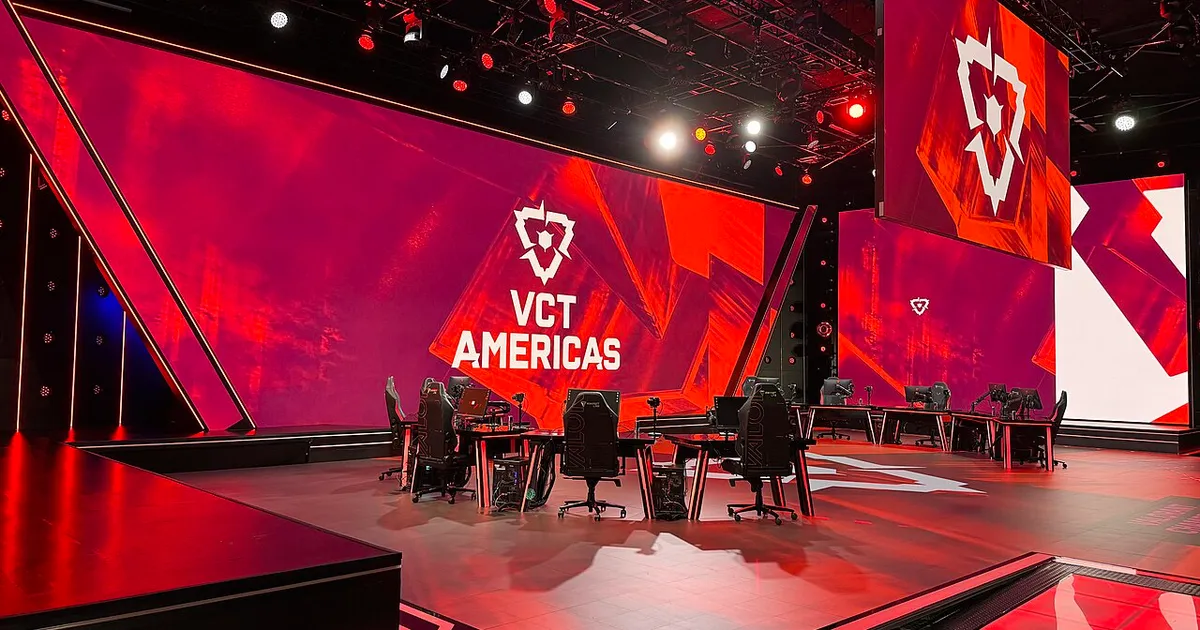
Photo by DJTechYT / Wikimedia Commons / CC BY-SA 4.0
Tactical shooters occupy a specific niche in competitive gaming: round-based, economy-driven, and unforgiving of individual mistakes. Counter-Strike 2 and Valorant are the two biggest names in that space right now, and while they share a common ancestor in design philosophy, their competitive scenes run a little differently.
Round-based structure and the in-game economy
Both games are built around winning rounds rather than accumulating kills. Teams alternate between attacking and defending sides, and matches are decided by whichever team reaches the target number of round wins first. What makes this format distinct from most shooters is the economy layer: money earned from round wins, losses, and kills has to be spent on weapons and utility at the start of each round. Losing several rounds in a row can leave a team unable to afford proper equipment, forcing “eco” rounds where they intentionally sit out a fight to save money for the next one. Reading the economy — your own and the opponent’s — is as much a part of high-level play as aim.
Counter-Strike 2’s roots and structure
Counter-Strike 2, Valve’s successor to Counter-Strike: Global Offensive, carries forward more than two decades of competitive history. Its esports scene runs through a mix of Valve-sponsored Majors and a broader circuit of tournaments run by third-party organizers, with teams earning invites through regional qualifiers and ranking systems. The game’s five-versus-five format, fixed map pool, and bomb-defusal objective have stayed remarkably consistent across the franchise’s history, which is part of why CS has one of the most established competitive infrastructures in esports.
Valorant’s agent layer
Valorant, developed by Riot Games, takes the same round-based, economy-driven foundation and adds character-based abilities on top. Each player selects an “agent” with a unique kit of utility — smokes, flashes, recon tools, or area-denial effects — which adds a strategic layer beyond gunplay alone. Riot runs Valorant’s top-level competition through its VCT (Valorant Champions Tour) circuit, which includes regional leagues and international events feeding into a global championship. Because Riot operates the entire competitive pipeline directly, Valorant’s esports structure tends to be more centralized than Counter-Strike’s more open, third-party-organizer model.
Why the format works for spectators
Round-based tactical shooters translate well to viewership because each round is a self-contained story: a buy decision, a strategy, an execution, and a clear outcome, all inside roughly two minutes. That rhythm — paired with shoutcasters translating economy and utility decisions in real time — is a big part of why both games have sustained large viewership numbers on streaming platforms for years.
If you’re getting into watching or playing either game competitively, understanding the economy is the single highest-leverage thing to learn first — it explains far more of what’s happening on screen than raw aim ever will.
Our picks: Competitive gear
Shop on Amazon
Affiliate links.As an Amazon Associate I earn from qualifying purchases. Links below go to Amazon; prices and availability change, so check Amazon for current pricing.Affiliate disclosure



Illustrative photos: Photo by Jacek Halicki / Wikimedia Commons / CC BY-SA 4.0; Photo by PantheraLeo1359531 / Wikimedia Commons / CC BY 4.0; Photo by Anirban Saha / Wikimedia Commons / CC BY-SA 4.0; Photo by Zephyris at English Wikipedia / Wikimedia Commons / CC BY-SA 3.0