Racing Wheel Force Feedback Types Explained: Gear, Belt, and Direct Drive
How gear-driven, belt-driven, and direct drive force feedback systems differ in sim racing wheels, and what each means for feel, noise, and price.
How gear-driven, belt-driven, and direct drive force feedback systems differ in sim racing wheels, and what each means for feel, noise, and price.
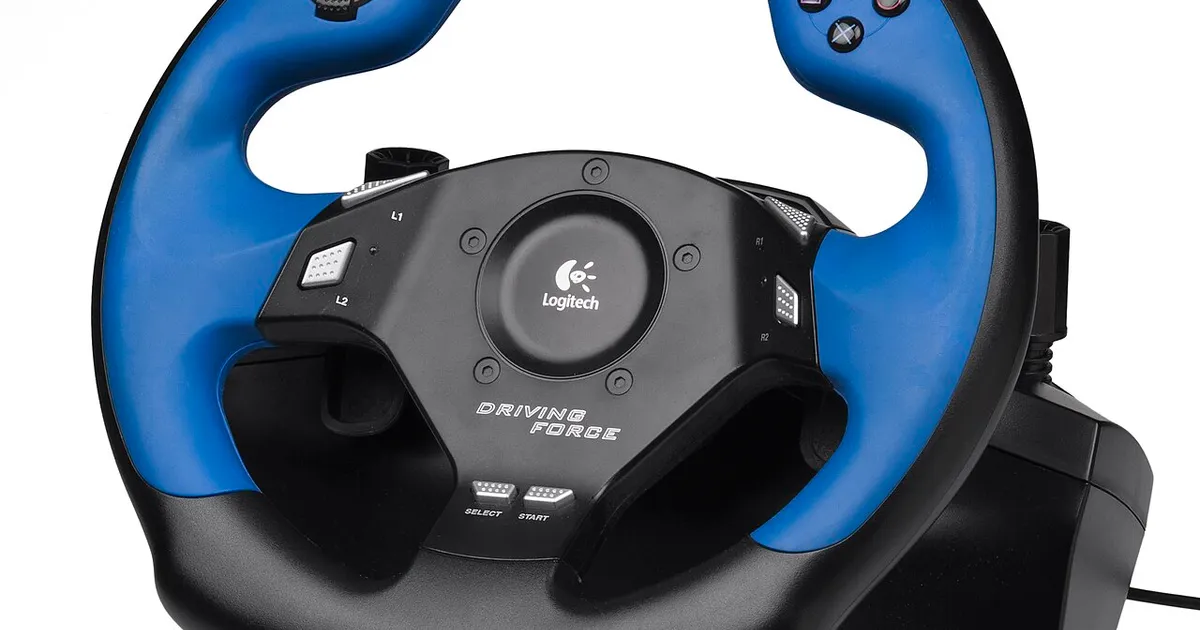
Photo by Evan-Amos / Wikimedia Commons / Public domain
Force feedback (FFB) is what makes a racing wheel feel like a racing wheel rather than an oversized controller — it’s the resistance and vibration the wheel pushes back into your hands to simulate road texture, curbs, tire slip, and collisions. How that force gets generated mechanically varies a lot between wheel types, and it’s the single biggest factor separating entry-level wheels from higher-end ones.
Gear-driven force feedback
Gear-driven systems use a motor connected to the wheel shaft through a set of gears. This is a common approach in entry-level and mid-range wheels because gears are relatively inexpensive to manufacture and allow for compact designs. The tradeoff is mechanical: gear teeth meshing together introduce some inherent looseness (backlash) and can produce audible whining or grinding noise, especially under load. Force feedback through gears also tends to feel slightly less precise at low-intensity forces, since the gear mechanism itself has to be overcome before force is faithfully transmitted to your hands.
Belt-driven force feedback
Belt-driven systems replace gears with a reinforced belt connecting the motor to the wheel shaft. This generally produces smoother, quieter force feedback than gear-driven systems since a properly tensioned belt has less mechanical play than meshing gear teeth. Belt-driven wheels are a common step up in the mid-range and upper-mid-range price bracket, offering noticeably improved feel over gear-driven entry wheels without jumping all the way to direct drive costs. The tradeoff is that belts can stretch or wear over time and may need occasional retensioning, and there’s still a mechanical transmission layer between motor and wheel that introduces some feel loss compared to a direct connection.
Direct drive force feedback
Direct drive systems connect the motor directly to the wheel shaft with no gears or belts in between. This eliminates the mechanical play and transmission losses inherent to gear and belt systems, producing the most precise, detailed, and responsive force feedback available in consumer sim racing hardware — subtle road texture and weight transfer cues come through with much less “muddiness” than geared or belted systems. Direct drive wheels are typically the most expensive category, both because of motor cost and because they generally require sturdier mounting (rigid desk or wheel stand) to handle the higher torque without flexing or shifting.
Torque and why it matters (and when it doesn’t)
Force feedback motors are often compared by maximum torque output, but higher torque isn’t automatically “better” for every driver — it changes how strong the forces can get, not how detailed or accurate they are. A well-tuned lower-torque wheel can still communicate road detail effectively; a high-torque wheel with poor tuning can feel harsh or fatiguing rather than informative. Torque headroom matters most for realistically simulating high-grip, high-downforce vehicles and serious collision forces, less so for casual or arcade-style racing.
Mounting matters as much as the drive type
Whatever drive type you choose, a wheel is only as good as its mounting. A wheel clamped to a wobbly desk will transmit that flex back into the feel of the force feedback, undermining even a high-end direct drive setup. Dedicated wheel stands or reinforced desk clamps designed for the torque level of your specific wheel are a worthwhile investment alongside the wheel itself, especially for higher-torque direct drive units.
Which type should you start with?
- Gear-driven: the accessible entry point for trying sim racing without a large investment; expect noticeable mechanical noise and less refined low-force detail.
- Belt-driven: a solid middle ground with meaningfully smoother, quieter feedback for a moderate step up in price.
- Direct drive: the most accurate and detailed option, best suited to players committed to sim racing who want the closest feel to real driving forces, and who are prepared for the mounting requirements and price.
Start with what matches your budget and commitment level rather than assuming you need the most powerful option immediately — a well set up gear or belt wheel is still a massive step up from a gamepad, and plenty of sim racers spend years happily on mid-range hardware before considering direct drive.
Our picks: Racing wheels
Shop on Amazon
Affiliate links.As an Amazon Associate I earn from qualifying purchases. Links below go to Amazon; prices and availability change, so check Amazon for current pricing.Affiliate disclosure
Illustrative photos: Photo by Evan-Amos / Wikimedia Commons / Public domain