Microphone Polar Patterns Explained for Streamers
What cardioid, omnidirectional, bidirectional, and other microphone polar patterns actually mean, and how to pick the right one for your recording setup.
What cardioid, omnidirectional, bidirectional, and other microphone polar patterns actually mean, and how to pick the right one for your recording setup.
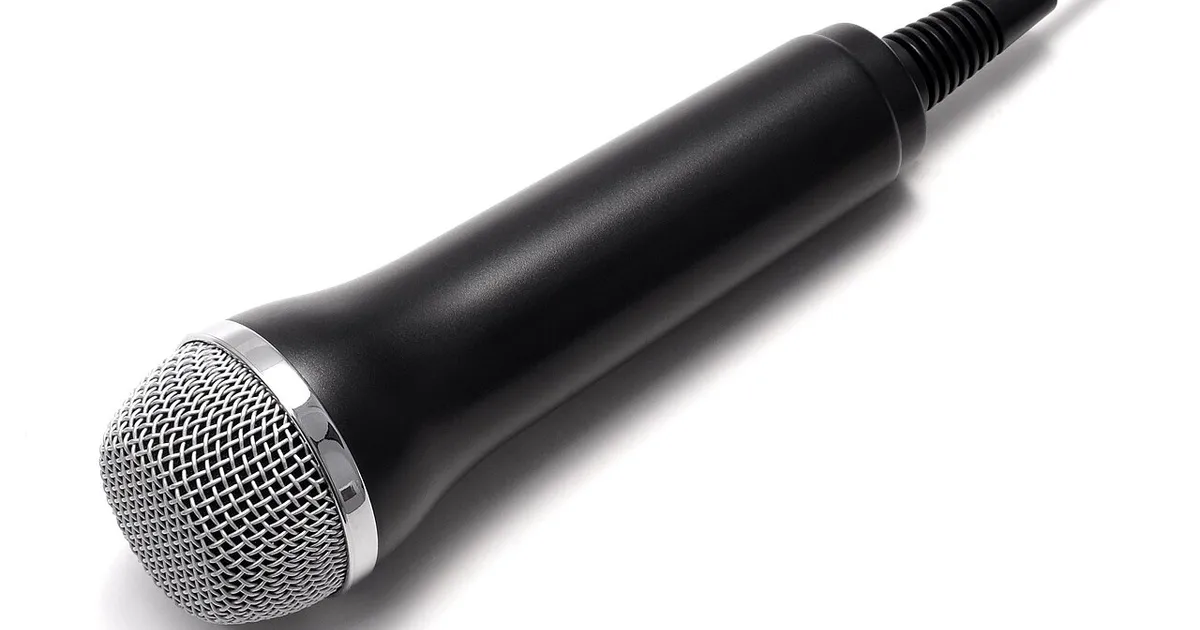
Photo by Evan-Amos / Wikimedia Commons / Public domain
Polar pattern is one of the most important microphone specs and one of the least understood outside of audio circles. It describes the direction(s) a microphone is most sensitive to sound from — and picking the wrong pattern for your setup can undo the benefit of an otherwise good mic.
What a polar pattern actually describes
Every microphone picks up sound differently depending on the direction it’s coming from relative to the capsule. A polar pattern is a visual/technical description of that sensitivity — imagine a diagram around the mic showing where it “hears” loudest and where it rejects sound most. Some mics offer a single fixed pattern; others (usually higher-end condenser mics) let you switch between multiple patterns.
Cardioid: the streaming default
Cardioid is the most common pattern for gaming, streaming, and voice chat mics. It picks up sound primarily from the front, rejecting sound from the rear and reducing sensitivity from the sides. This makes it well-suited to solo setups: it captures your voice clearly while reducing pickup of keyboard clatter, computer fan noise, or room echo coming from behind or beside the mic. If you’re recording alone at a desk, cardioid is almost always the right default.
Omnidirectional: even pickup all around
Omnidirectional mics pick up sound roughly equally from all directions. This is useful for group recordings around a single mic (multiple people at a table) or for capturing natural room ambience, but it’s a poor choice for a typical single-streamer desk setup — it picks up just as much keyboard and fan noise as it does your voice, since it doesn’t reject off-axis sound.
Bidirectional (figure-8): front and back, not sides
Bidirectional mics pick up sound from directly in front and directly behind, while rejecting sound from the sides. This pattern is specifically useful for face-to-face interviews or two-person setups sitting across from each other, but it’s a niche choice for gaming/streaming unless you’re specifically recording that kind of side-by-side or across-the-desk conversation.
Stereo and multi-pattern mics
Some mics offer a stereo pattern that captures a wider spatial image, useful for music or ambient recording, but generally unnecessary — and sometimes counterproductive — for spoken voice content like commentary or streaming, where a focused, direct pickup is usually preferable. Multi-pattern mics let you switch between cardioid, omnidirectional, bidirectional, and sometimes others via a physical switch or software, which is a nice feature if your use case actually varies (solo streaming one day, a co-hosted interview the next).
Matching pattern to your actual setup
- Solo streamer/gamer at a desk: cardioid, almost always. It rejects the most common noise sources (keyboard, fans, room echo) while focusing on your voice.
- Two people recording across a table: bidirectional, if the mic offers it, or two separate cardioid mics each pointed at one person for cleaner individual control.
- Group recording around one mic: omnidirectional, accepting that background noise pickup will be higher.
- Uncertain or mixed use: a multi-pattern mic gives flexibility, at a higher price point than fixed-pattern equivalents.
Placement still matters within a pattern
Even the right polar pattern won’t fully compensate for poor placement. A cardioid mic pointed slightly away from your mouth, or positioned too far away, picks up more off-axis coloration and room noise than one positioned correctly close to and aimed at the sound source. Getting placement and distance right (generally a few inches to about a foot, depending on the mic and your voice) matters as much as the pattern selection itself.
The takeaway
Polar pattern isn’t a “premium feature” to chase for its own sake — it’s a practical spec that should match how you actually record. For the overwhelming majority of solo gaming and streaming setups, a good cardioid mic, correctly placed, solves the problem completely. Save multi-pattern flexibility for when you have an actual recurring use case that needs it.
Our picks: Microphones
Shop on Amazon
Affiliate links.As an Amazon Associate I earn from qualifying purchases. Links below go to Amazon; prices and availability change, so check Amazon for current pricing.Affiliate disclosure
Illustrative photos: Photo by Evan-Amos / Wikimedia Commons / Public domain